
METiS TechBio, a global leader in AI-powered drug delivery innovation, today announced its interim results for the six months ended June 30, 2026.
During the reporting period, the Company achieved significant breakthroughs in both technology and commercialization. On the technology front, its platform capabilities expanded from drug delivery design to the systematic design of proteins, nucleic acids, delivery systems, and cellular states, marking a strategic evolution toward Biological AI for “programming life.” On the commercialization front, NanoForge accelerated the commercialization of AI for Science (AI4S) applications in the life sciences sector.
Dr. Chris LAI, Chairman and CEO of METiS TechBio, said: “We aim to use AI to transform drug R&D from a process of repeated project-by-project trial and error into an engineering system for life sciences that can continuously learn, repeatedly validate, and generate innovation at scale. The transition from drug delivery to programming life represents the most important strategic evolution for METiS TechBio in its next phase of growth.”
During the reporting period, the Company recorded revenue of RMB154.3 million, representing a 13,399% year-over-year increase and exceeding its full-year 2025 revenue by 47%. Adjusted net loss narrowed significantly by 56.4% to RMB51.1 million, while R&D expenses increased 48.1% year over year to RMB172.4 million.
As of the end of the reporting period, the Company had 150 employees, with R&D personnel accounting for more than 70% of its workforce. The Company had RMB3,025 million in financial reserves, while its debt-to-asset ratio improved from 19% at the end of 2025 to 9%, reflecting a strong financial position.
During the reporting period, the commercial value of NanoForge entered a period of accelerated realization, receiving continued validation from both global industry partners and the capital markets.
- Global Exclusive License for MTS-128 Marks a Milestone in the Internationalization of China-Originated Preclinical AI-Discovered Assets
The Company entered into a global exclusive licensing agreement with Boulevard Bio, a U.S.-based biotechnology company backed by Deerfield, granting Boulevard Bio global development, manufacturing, and commercialization rights to MTS-128, a proprietary trispecific T-cell engager (TCE) discovered and developed by METiS TechBio.
The Company received an upfront payment of US$20 million and is eligible to receive up to US$1,600 million in development, regulatory, and commercialization milestone payments, in addition to tiered royalties based on product sales.
The transaction not only represents a record-setting overseas licensing deal for a preclinical TCE program originated by a Chinese pharmaceutical company, but also further validates NanoForge's ability to continuously generate innovative assets with global commercial value.
- AiTEM AI-Powered Formulation Innovation Platform Enters into Collaboration with Hengrui Pharma
The AiTEM platform will be deployed locally at Hengrui Pharma, with an initial focus on formulation development for poorly soluble drug candidates.
The collaboration marks another step in NanoForge's expansion toward infrastructure-level applications across the external pharmaceutical industry.
- Potential Transaction Value of OpenCGT Programs Exceeds RMB6,000 Million
Leveraging the capabilities of NanoForge, the Company continues to empower partners across the global cell and gene therapy (CGT) sector. To date, METiS TechBio has entered into technology collaborations with multiple leading companies across specialized areas, spanning cell therapy, gene therapy, fibrotic cell programming, and in vivo immunotherapy.
The collaboration models include research collaborations, joint development, and licensing of drug delivery technologies, with the aggregate potential transaction value exceeding RMB6,000 million.
The acceleration of commercialization is underpinned by the technological evolution of NanoForge in the life sciences.
The Company is expanding NanoForge from a platform focused on “precisely delivering therapeutics to target tissues and cells” into a more comprehensive engineering platform for biological systems. By leveraging AI to understand and generate proteins/antibodies, nucleic acid sequences, and delivery vehicles, and by integrating formulation development, high-throughput experimentation, and in vivo validation into a closed loop, the Company is further exploring the predictable, designable, and programmable control of cellular states and biological functions.
NanoForge is not merely a point solution for drug delivery. It is Biological AI infrastructure connecting “digital design, wet-lab validation, pharmaceutical engineering, and clinical and commercial translation.” It does not merely use AI to assist individual steps of drug development; instead, it enables data, models, experiments, and drug assets to continuously learn within a unified system, creating reusable and scalable capabilities for drug innovation.
During the reporting period, the Company launched the AiProtein platform and AARON (AI Antibody Rational Optimization Network), extending its AI capabilities from nucleic acids and drug delivery to protein and antibody design.
AARON covers de novo antibody generation, structural and functional prediction, affinity optimization, and multi-parameter developability assessment, and can be integrated with applications including TCEs, antibody-drug conjugates (ADCs), and actively targeted drug delivery. Key property prediction metrics achieved Spearman correlation coefficients above 0.8.
METiS TechBio has now established a full-stack Biological AI capability comprising AiProtein, AiRNA, AiLNP, and AiTEM: AiProtein — protein and antibody design; AiRNA — nucleic acid sequence design; AiLNP — delivery system design; and AiTEM — formulation development and validation.
High-throughput wet-lab experiments and in vivo screening continuously feed real-world experimental data back into the models. This closed loop enables the simultaneous design of what the therapeutic is, how it is delivered, and how it can be developed into a drug, while further advancing toward the understanding and programming of cellular states.
2,Multiple Breakthroughs in Drug Delivery: Building Precision Delivery Capabilities from Organs to Cells
During the reporting period, the Company achieved multiple substantive breakthroughs in organ- and cell-specific delivery, further validating NanoForge's ability to precisely control complex biological systems.
- High-Throughput DNA-Barcoded LNP In Vivo Screening Platform in NHPs
The platform enables the simultaneous evaluation of dozens of candidate LNPs in a single cynomolgus monkey, precisely characterizing differences in delivery enrichment across tissues and biofluids, including the liver, lungs, spleen, and peripheral blood.
It enables quantitative assessment of the biodistribution of dozens of candidate LNPs across multiple tissues in parallel, establishing an integrated workflow spanning high-throughput formulation preparation through high-throughput in vivo validation in non-human primates (NHPs).
- Site-Specific Antibody Conjugation Platform for Targeted LNPs (tLNPs)
Through multidimensional conjugation pathway design and cross-validation, the platform improves the stability of tLNPs during manufacturing as well as their stability in systemic circulation. The resulting tLNPs demonstrated high transfection efficiency in vitro and in mouse models in vivo.
- Cardiac Muscle-Targeted LNP Platform (CM-tLNP)
In mouse models, the platform achieved >95% transfection of cardiomyocytes with reporter gene mRNA, as well as >50% gene editing using CRISPR mRNA/gRNA, while maintaining extremely low editing rates in non-target organs.
The research was recognized with the Outstanding Researcher Award in Gene Delivery and Editing at the 2026 conference of the Controlled Release Society.
- In Vivo CAR-T Active-Targeting LNP Platform
The platform is designed as a plug-and-play delivery system. Following modification with T-cell-targeting ligands, both transfection efficiency and specificity were substantially enhanced. In mouse and NHP models, delivery efficiency reached more than three times that of the industry's gold-standard control group.
Powered by NanoForge, the AiRNA sequence design platform uses AI algorithms and high-throughput screening to design target protein and mRNA sequences, significantly improving their stability and expression levels.
The AiRNA platform has enabled efficient in vivo expression of mRNA-based cancer vaccines, supporting the rapid customization of personalized neoantigen mRNA vaccines.
The AiRNA platform has independently developed a deep generative neural network trained on more than 20,000 experimentally validated IRES sequences. Initial validation has been completed, enabling joint learning and generative design across RNA sequence, structure, and translational regulatory function.
Multiple sequences with highly efficient translational regulatory activity have been identified, with some demonstrating substantially higher activity than the classical CVB3 IRES.
Leveraging the full-stack capabilities of AiLNP, AiRNA, AiProtein, and AiTEM, METiS TechBio has established a pipeline of more than 10 programs across oncology, immunology, metabolic diseases, and central nervous system disorders.
The pipeline encompasses a diversified portfolio of therapeutic modalities, including small-molecule formulations, mRNA-encoded T-cell engagers (TCEs)/NK-cell engagers (NKCEs), mRNA therapeutic vaccines, and proteins/antibodies, creating a multi-stage pipeline across different modalities and development stages.
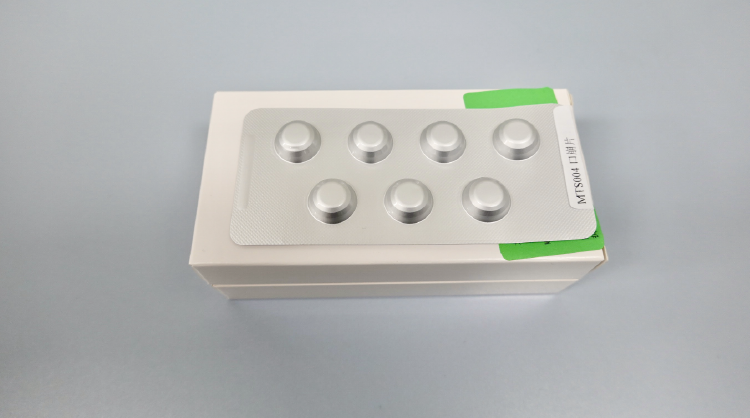
MTS-004 | NDA Submission Stage
The licensee has completed pre-NDA discussions with the regulatory authority and is currently advancing process and manufacturing validation, following which it will proceed with the NDA submission.
The program was incubated through the AiTEM platform, demonstrating the platform's end-to-end capabilities from R&D design through regulatory and commercial translation.
MTS-201 | Weight Management and Metabolic Diseases | Phase 1
MTS-201 is a novel oral TGR5 agonist designed to explore therapeutic potential in weight management and metabolic diseases through activation of endogenous metabolic pathways involving GLP-1, GLP-2, and PYY.
Part B of the Phase 1 study has been completed, while Part C has been initiated and is progressing as planned, generating key data to support subsequent proof-of-concept development.
MTS-109 | IIT — Simultaneous IND Applications in China and the United States
MTS-109 is a potential best-in-class mRNA-encoded trispecific TCE for which positive early clinical data have been observed.
Using LNP-mediated mRNA delivery, MTS-109 enables in vivo expression of a CD3×CD19×BCMA trispecific T-cell engager, designed to simultaneously target a broader range of pathogenic B-cell and plasma-cell populations to achieve deeper B-cell depletion.
The program is being developed for autoimmune diseases including systemic lupus erythematosus (SLE), lupus nephritis (LN), systemic sclerosis (SSc), and myasthenia gravis (MG), while also exploring the potential for subcutaneous administration.
MTS-105 | Solid Tumors / In Vivo TCE | IIT
MTS-105 is a liver-targeted mRNA-LNP TCE developed based on the AiRNA and AiLNP platforms. The program has entered the dose-escalation stage at Peking University Cancer Hospital.
Preclinical findings for the program were published in Nature Communications. In mouse models, MTS-105 achieved complete elimination of hepatocellular carcinoma and induced long-term T-cell immune memory.
MTS-107 | mRNA Cancer Vaccine | PCC Preclinical Candidate
MTS-107 is an mRNA therapeutic vaccine targeting HPV16/18-positive cervical cancer and head and neck cancer.
The program employs precision delivery to the spleen using a spleen-targeted LNP, combined with a dual-antigen E6/E7 design and co-expression of the immunostimulatory factor GM-CSF. In mouse models, combination treatment with a PD-1 inhibitor achieved a 100% complete response rate.
Preclinical research on the program was published in the Journal for ImmunoTherapy of Cancer (JITC).
Looking ahead, METiS TechBio will continue to advance NanoForge along three strategic priorities:
1, Further strengthen the closed loop between AI models and proprietary experimental data;
2, Accelerate platform collaborations, technology licensing, local deployment, and joint development; and
3, Advance the regulatory submission of MTS-004 and clinical validation of key assets including MTS-201, MTS-109, MTS-105, and MTS-107.
From Drug Delivery to Programming Life
The evolution from drug delivery to programming life is not a replacement of existing capabilities, but an upward integration of them.
Delivery determines whether a therapeutic can reach its intended destination; the payload determines what the therapeutic expresses; and proteins determine how the therapeutic exerts its function. NanoForge aims to integrate these components into an engineering system capable of continuous self-learning and iterative improvement.